
Intelligent transformation represents the strategic integration of advanced technologies within manufacturing. This approach aims to optimize production operations comprehensively. It directly enhances mold utilization rates. Furthermore, it significantly boosts overall production efficiency, especially for Rotational Molding product factories.
Key Takeaways
- Intelligent transformation uses new technology to make factories better. It helps factories use molds more and make more products.
- Factories use smart machines and data to work faster. This means less waiting time and better products.
- Training workers and checking quality with digital tools helps factories grow. It makes sure products are good and employees are happy.
Optimizing Core Rotational Molding Processes for Efficiency
Strategic Machine Selection and Configuration
Factories must carefully select and configure machines to maximize efficiency. They consider specific application requirements and desired production volume. Key criteria include energy efficiency, material compatibility, and the machine's capacity for various mold sizes. Advanced automation and control features reduce labor costs and improve consistency. Robust construction ensures a longer lifespan and less downtime. Factories also evaluate vendor support, ease of maintenance, and the total cost of ownership. High machine precision and production rates are essential for quality and output.
Precision Cycle Time Optimization
Optimizing cycle times significantly boosts production. Factories use specialty chemicals, like thermal stabilizers, to maintain consistent temperatures during heating and cooling. This ensures uniform melting and solidification. A robust control system for the oven quickly reaches and maintains ideal temperatures. This reduces heating and cooling times. Advanced cooling techniques, such as continuous mist sprayers, shorten the cooling phase without compromising part quality. Selecting polymers with high thermal conductivity also allows for faster heat distribution. Regular machine maintenance and precise calibration prevent issues that could extend cycle times.
Advanced Material Handling and Feeding Systems
Efficient material handling is vital for continuous operation. Carousel or turret systems feature multiple arms moving through load, oven, cool, and unload stations. These systems support near-continuous production. Rock-and-roll machines rotate 360 degrees on one axis and rock on another. They are ideal for very long, narrow parts like kayaks. Shuttle machines use two arms that move linearly between heating and cooling chambers. They suit continuous, high-volume work, often with single large tooling. Clamshell machines are compact, single-arm units where the oven opens like a shell. These are best for prototyping or smaller batches in Rotational Molding.
Leveraging Data and Automation in Rotational Molding
Real-time Production Monitoring and Analytics
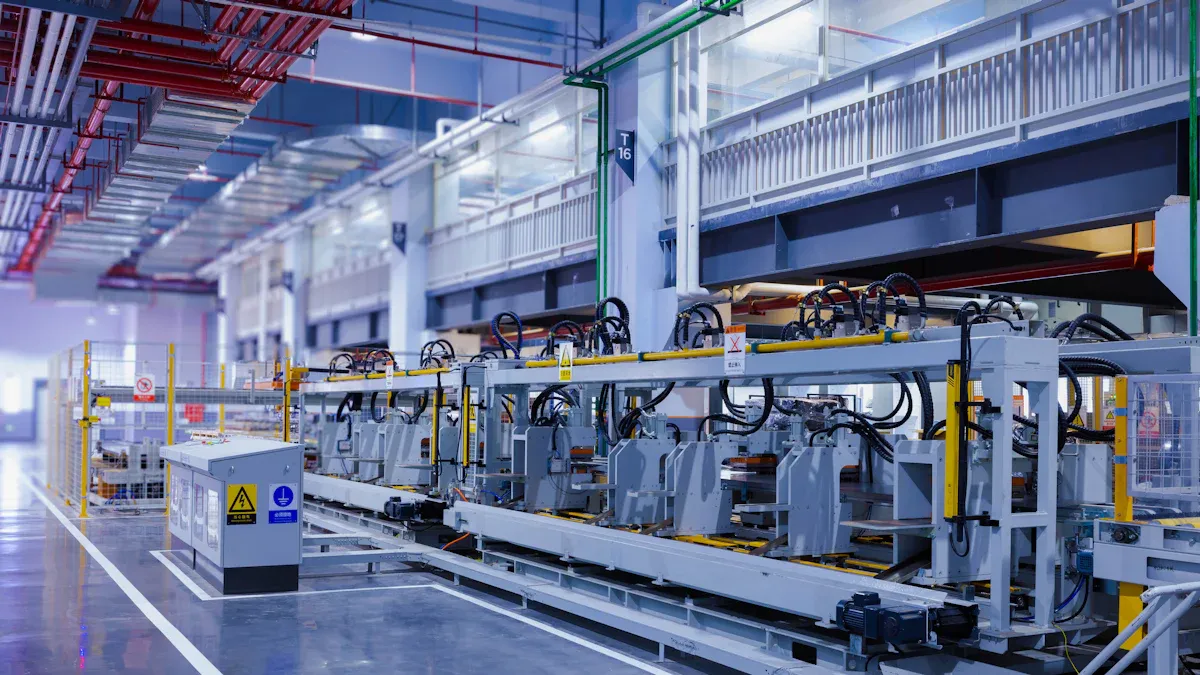
Factories gain significant advantages from real-time production monitoring. These systems for Rotational Molding Machines incorporate advanced features. They include temperature control for greater precision, automation, and the use of sensors and IoT technologies. These components enable real-time performance monitoring and issue detection. Thisenhances efficiency and reduces costs. Operators can identify deviations immediately. This allows for quick adjustments and prevents costly errors.
Predictive Maintenance for Molds and Machinery
Predictive maintenance prevents unexpected downtime. It uses advanced technologies to foresee equipment failures.
- AI and machine learning models analyze this data. They predict potential failures and optimize maintenance schedules.
- Digital twins create virtual models of physical assets. They simulate performance and identify issues proactively.
- Big data analytics manage and analyze complex machine data sets. This uncovers patterns indicating potential problems.
- Vibration analysis technology monitors rotating machinery. AI models detect subtle changes in vibration patterns linked to faults.
- Computer vision uses cameras and AI. It detects surface defects, component misalignments, and wear in real-time. AI tracks parameters like injection speed, temperature, and pressure patterns in injection molding machines. This predicts component fatigue in molds. This approach is directly analogous and applicable to predicting fatigue and wear in rotational Molding Molds. It prevents defects in plastic products. IoT-enabled monitoring,AI-driven process control, and digital twin technology are crucial for this.
AI-Driven Process Parameter Adjustment
AI algorithms dynamically adjust process parameters. This optimizes production. The platform integrates historical and real-time process data from various sources. It uses predictive analytics to forecast end-of-run outcomes. The system provides prescriptive set point corrective actions. These recommendations can be implemented through a closed-loop system. The platform's machine learning capabilities allow for continuous optimization. This gains precise control over temperature and rotational speed. It ensures even material distribution. It reduces cycle times. AI adoption is negatively correlated with manufacturing firms' energy intensity. AI improves energy efficiency and productivity. This leads to a substantial reduction in firms' energy intensity.
Enhancing Operational Excellence and Workforce in Rotational MoldingIntegrated Production Planning and Scheduling
Effective planning and scheduling are crucial for factory output. Manufacturers often lose 15-30% of production time to changeovers and setups. Strategic scheduling significantly reduces this downtime. It boosts overall equipment effectiveness. Software solutions like Infor ERP assist with rotational mold planning. This system handles Bill of Materials (BOM), by-product capture, and virgin/regrind mix management. It also supports concurrent planning and multi-cavity management. RotoEdge Pro offers rotomolding-specific scheduling. It provides real-time machine scheduling, order tracking, and inventory control. This software helps factories track machine productivity and available capacity. Grouping similar products minimizes adjustment needs between runs. This dramatically reduces changeover times.
Digital Quality Control and Traceability
Digital quality control ensures product consistency and safety. It provides real-time data capture and visibility. This allows quick identification of issues like equipment failure or defect spikes. Detailed audit trails offer accurate records of operations. This simplifies inspections and demonstrates regulatory adherence. Digital traceability also supports continuous compliance with changing standards. Technologies like RFID, IoT sensors, and blockchain enhance supply chain visibility. They streamline data collection and improve temperature monitoring. This enables precise recall responses. For example, the FDA’s FSMA Rule 204 mandates extensive recordkeeping for certain foods. This principle applies to Rotational Molding products, ensuring quick identification of problematic batches.
Continuous Workforce Training and Upskilling
Continuous training develops employee skills. It ensures their expertise remains valuable. This creates career advancement opportunities. Employees gain new skills and certifications. This leads to promotions and increased job responsibilities. Training also increases job satisfaction and engagement. Engaged employees show 23% higher profitability, according to Gallup research. Employees who learn at work are 47% less stressed. They are 21% more confident and happy. Continuous training equips employees to adapt to new technologies and processes. This cultivates a growth mindset and a resilient workforce.
Intelligent transformation strategies create a powerful synergy. They significantly boost mold utilization and production efficiency. Smart Rotational Molding factories gain a distinct competitive advantage. This integrated approach ensures sustained growth and market leadership.
FAQ
What is intelligent transformation in rotational molding?
Intelligent transformation integrates advanced technologies like AI, IoT, and automation into rotational molding. This optimizes processes, enhances efficiency, and improves product quality.
How does intelligent transformation improve mold utilization?
Intelligent systems optimize production schedules and predict maintenance needs. This reduces downtime and maximizes the active use of molds. Real-time monitoring also prevents errors.
What are the main benefits of intelligent transformation for factories?
Factories achieve higher production efficiency, reduced operational costs, and improved product consistency. They also gain a competitive edge through data-driven decision-making and innovation.
Media Contact
Company Name: Ningbo Jinhong Mold CO., LTD.
Email: Send Email
Country: China
Website: https://www.jinhongmold.com/